

Climate Change Management
The Company has established a sustainability strategy that prioritizes addressing the impacts of climate change, focusing on both mitigation and adaptation. This strategy ensures compliance with applicable laws and regulations and stakeholder expectations while integrating environmentally friendly innovations into operations, such as the use of clean energy, reduction of GHG emissions, and the development of sustainable production processes. The Company also conducts ongoing assessments of climate-related risks, including both Transition Risks and Physical Risks, to enhance preparedness and maintain long-term competitiveness.
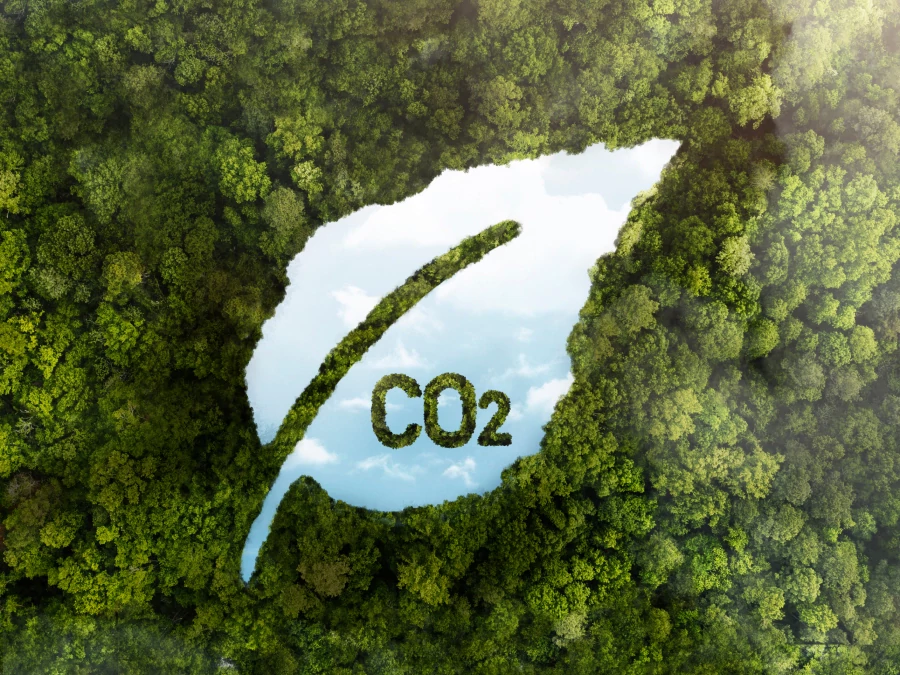
In addition, the Company has set clear GHG reduction targets in line with national commitments and international standards, aiming to achieve Carbon Neutrality by 2030 and Net-Zero Emissions by 2050. These efforts are overseen by the Risk Management and Sustainable Development Committee (RMSDC) and supported by the Net Zero Working Team. The Company also engages in networks and associations to collaborate on climate action with other stakeholders. Key initiatives include the installation of solar rooftops, the adoption of electric forklifts, air pollution management, and the promotion of biodiversity. Collectively, these efforts reflect the Company’s commitment to operating responsibly and sustainably, while creating positive impacts for society and the environment.
Explore MoreNRF Pathway to Net Zero
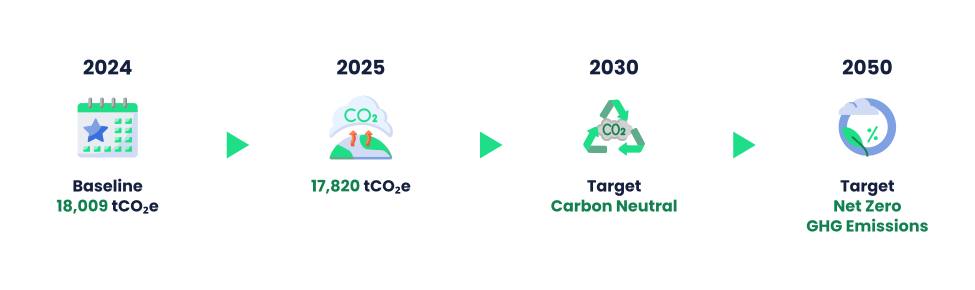
Performance Overview
Reduce GHG emissions intensity (Scope 1&2)

Target 2025
Performance 2025
Achieved Carbon Neutrality*

Target 2025

Performance 2025
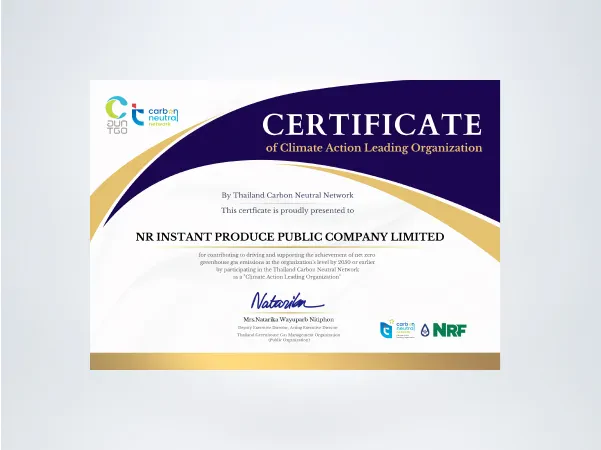
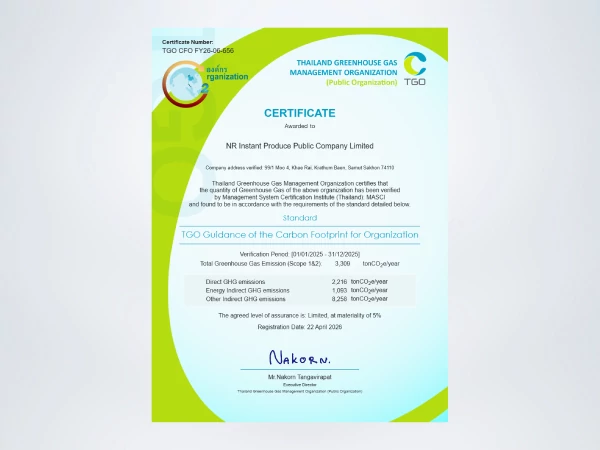
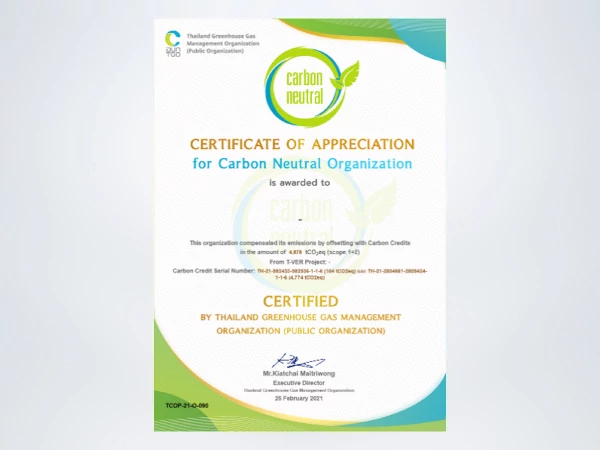
*NRF received Carbon Neutral Organization certifications from TGO for 5 consecutive years, starting in 2021.
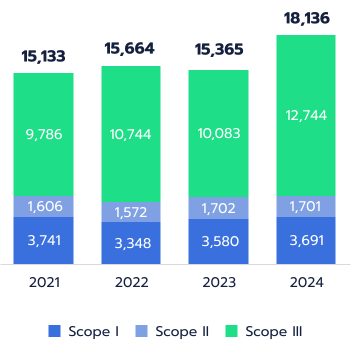
Total GHG Emissions by Scope
(tCO2e)
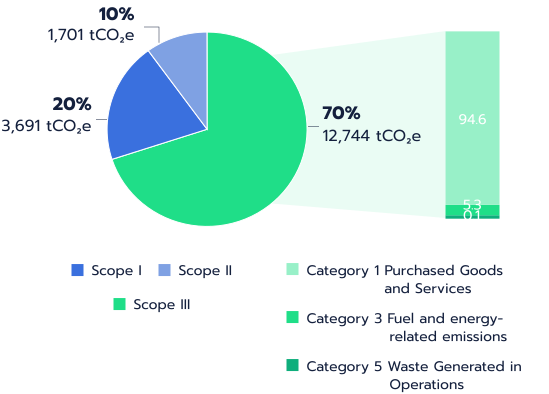
Proportion of GHG Emissions by Scope
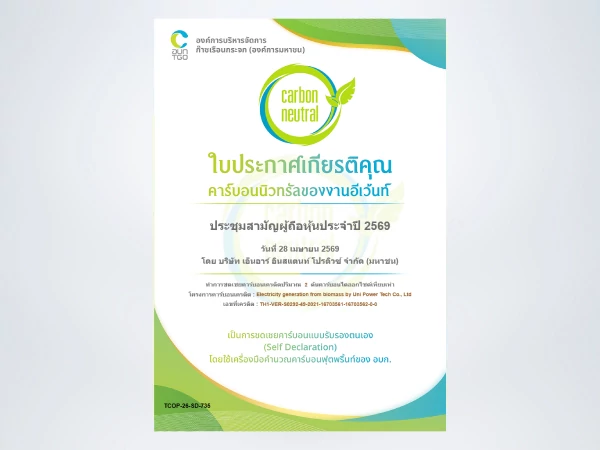
Awards and Recognitions

Resource Efficiency
The Company places great importance on efficient resource management to support the achievement of its sustainability goals. We implement policies to ensure the efficient use of electricity and fuel in our production processes, while also promoting the use of renewable energy sources such as Solar PV. The Company is also undertaking efforts to replace equipment and machinery with environmentally friendly alternatives and to enhance the efficiency of boiler systems to ensure sustainable energy consumption. The Company has set clear targets and regularly monitors performance to drive continuous reductions in energy and resource consumption.

In terms of water management, the Company has established policies and plans to manage risks related to water scarcity and reduce impacts on local communities. Measures include monitoring and controlling wastewater quality to comply with legal requirements, as well as promoting water recycling to reduce reliance on natural water sources and minimize wastewater discharge. The Company conducts annual water risk assessments across operational sites, with emergency measures in place to ensure preparedness. In addition, the Company promotes awareness program to foster a culture of energy and resource conservation among employees and shares environmental knowledge with the wider community, thereby encouraging broader participation in advancing sustainability.
Explore MorePerformance Overview
Reduce electricity intensity

Target 2025
Performance 2025
Reduce water intensity

Target 2025
Performance 2025
Conduct water risk assessments in water-stressed areas across all Company operational sites

Target 2025
Performance 2025

Waste and FLW Management
The Company is dedicated to efficient waste and resource management under the 3Rs principle (Reduce, Reuse, Recycle) and the Circular Economy approach, to minimize environmental impact and to optimize resource utilization. We operate in strict compliance with relevant laws and international standards such as the BRCGS (Brand Reputation through Compliance Global Standards) and the IFS (International Featured Standards). Our practices encompass reducing waste generation in production processes, proper segregation and storage, engagement with certified waste disposal providers, as well as the adoption of new technologies and awareness-building initiatives for employees and stakeholders. These efforts aim to reduce waste sent to landfill and increase the proportion of waste recovered for beneficial use in accordance with Circular Economy principles.

In addition, the Company places great importance on preventing food loss and managing food waste by enhancing production efficiency to minimize waste, redistributing surplus edible food to communities, and repurposing inedible portions for beneficial uses such as composting or animal feed, to reduce environmental burdens. The Company also supports initiatives such as “Soul Kitchen by NRF,” “Food Waste to Farm” and “Waste Wait,” and “NRF x Wake Up Waste,” which transform waste into valuable resources, reduce GHG emissions, and create balanced economic, social, and environmental value.
Explore Moreสรุปผลการดำเนินงาน
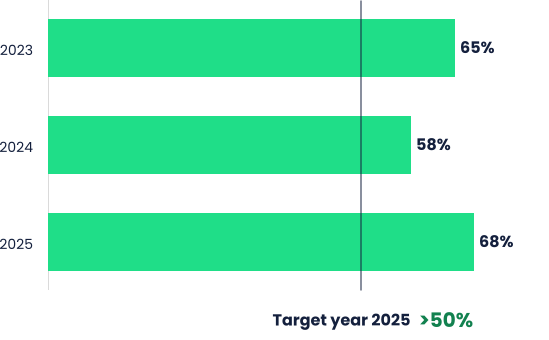
Increase waste recovery rate

Target 2025
Performance 2025
Increase food waste recovery rate

Target 2025
Performance 2025
Achieved Zero Food Waste to Landfill

Target 2025

Performance 2025

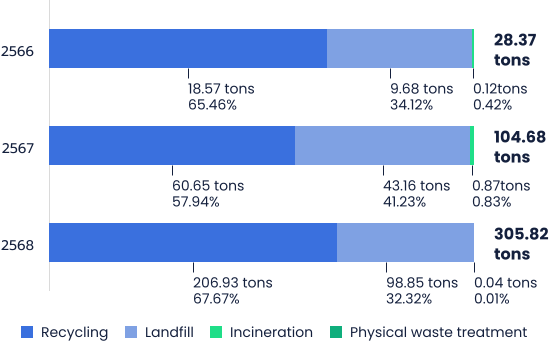
Waste Management by Disposal Method
Waste Recovery Rate
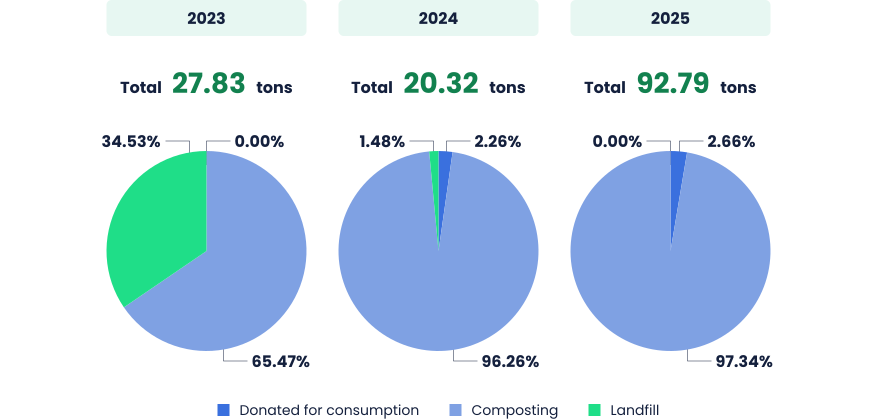
Food Waste Management by Disposal Method
Related Documents
- Environmental Policy Download